Hi everyone!
After general conference, I felt strongly that I should no longer procrastinate writing this email. So, here I am.
My opinion on writing has shifted over time, but one thing that has stayed consistent is this: I believe writing is an important part of thinking. A person who does not write much also does not think much. And in sharing this, I (kindly) condemn my own behavior over the last few months.
At my core, I believe that writing is deeply important to every person's life. So much so that I am making an app to effectively distill everything I believe about writing—why it is important, how it should be shared, how it should be stored and taken care of. But I lost myself in building, and often forgot to write. As a result, my purpose was less clear. The direction I was going was a little off-course. That isn't to say that I stopped making course-corrections—I've still been making progress, just not as fast as I would have liked.
But that changes now—I will resist the will of God no more.
First, have a link: https://apps.apple.com/us/app/diaryx-journal-archive/id6794781527
That is the link to Diaryx on the App Store. Yes, Diaryx is on the App Store now! It took about 7 submissions (and rejections) over the course of a month. There's a lesson in persistence to be had in there.
But more importantly, I want to share the app with you because it gives you an opportunity to learn what I believe is important through experimentation rather than explanation. So give it a shot! And for those of you who still value explanation, read on.
Ownership #
A few years ago, I was skeptical of copyright. I often read blogposts from sites like questioncopyright.org, and agreed with many of its positions about how intellectual property should be shared.
The general consensus is that copyright protects artists from having their art stolen, whether that is music, a movie, a drawing, or other artwork. But:
- Have you ever tried to share your screen while you were playing a movie on your phone or laptop, only to discover that the movie was replaced with a black screen?
- Have you ever been forced to pay hundreds of dollars on textbooks, even after paying thousands in tuition?
- Have you ever been forced to watch advertisements despite already paying a monthly subscription to the service you are using?
It is clear that copyright law is far from perfect. And yet, the alternative is worse: no movies, no music, no financial incentive for artists or writers to share anything they write.
There is a very rich history that I won't explore here. It suffices me to say that legislation generally favored the large companies, who sought restrictions on copying, promising that their artists and engineers would be motivated to produce lots of great things that would benefit everyone.
Some argue that his has led to situations like this:
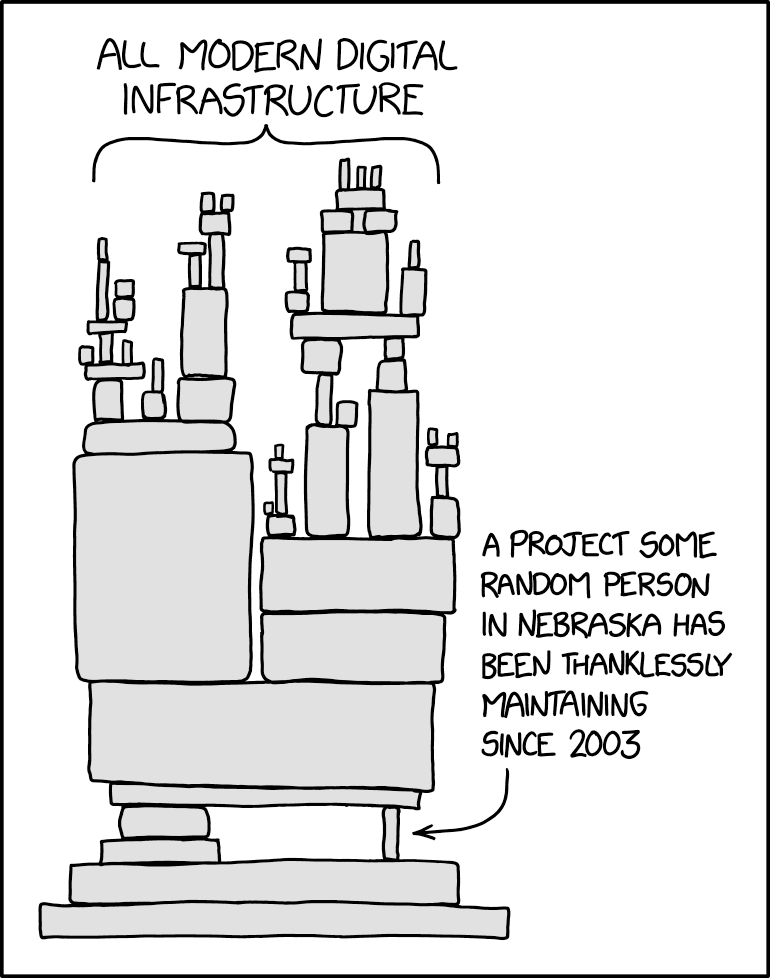
Why should someone be punished for wanting to share their work freely with others? That's the tradeoff the market has chosen, and it has only gotten worse as the technology industry has grown, especially with the advent of artificial intelligence:
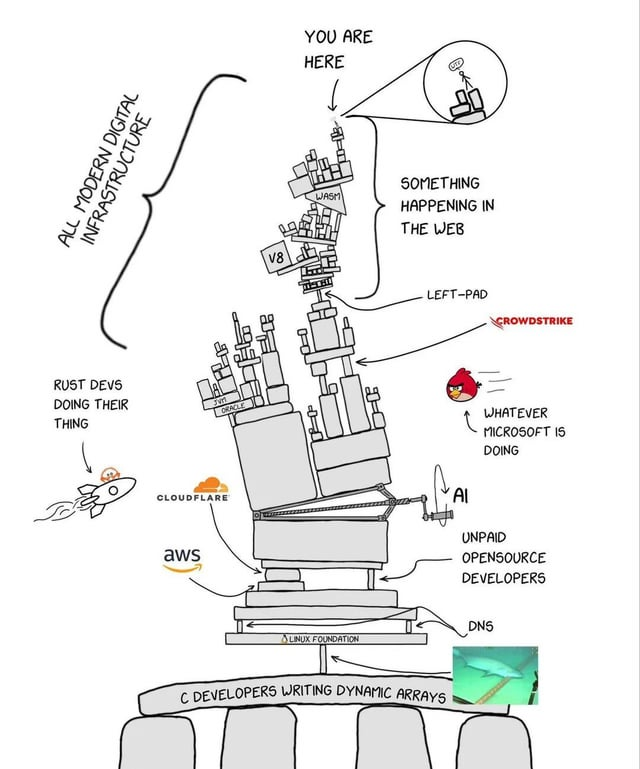
It is a pretty complicated situation! Note the AI crank in the middle upsetting the balance of everything (and the shark at the bottom biting the wire in the middle of the ocean)!
I believe that this problem, at its core, is caused by people choosing not to take responsibility for the works they create. I will explain more about this as we go on.
Usability #
Usability as a principle is equally important to the principle of ownership. If you can't understand or use a piece of information, no matter how valuable it may be to someone else, it is useless to you. So I made Diaryx a user-friendly interface to something that often gives people headaches:
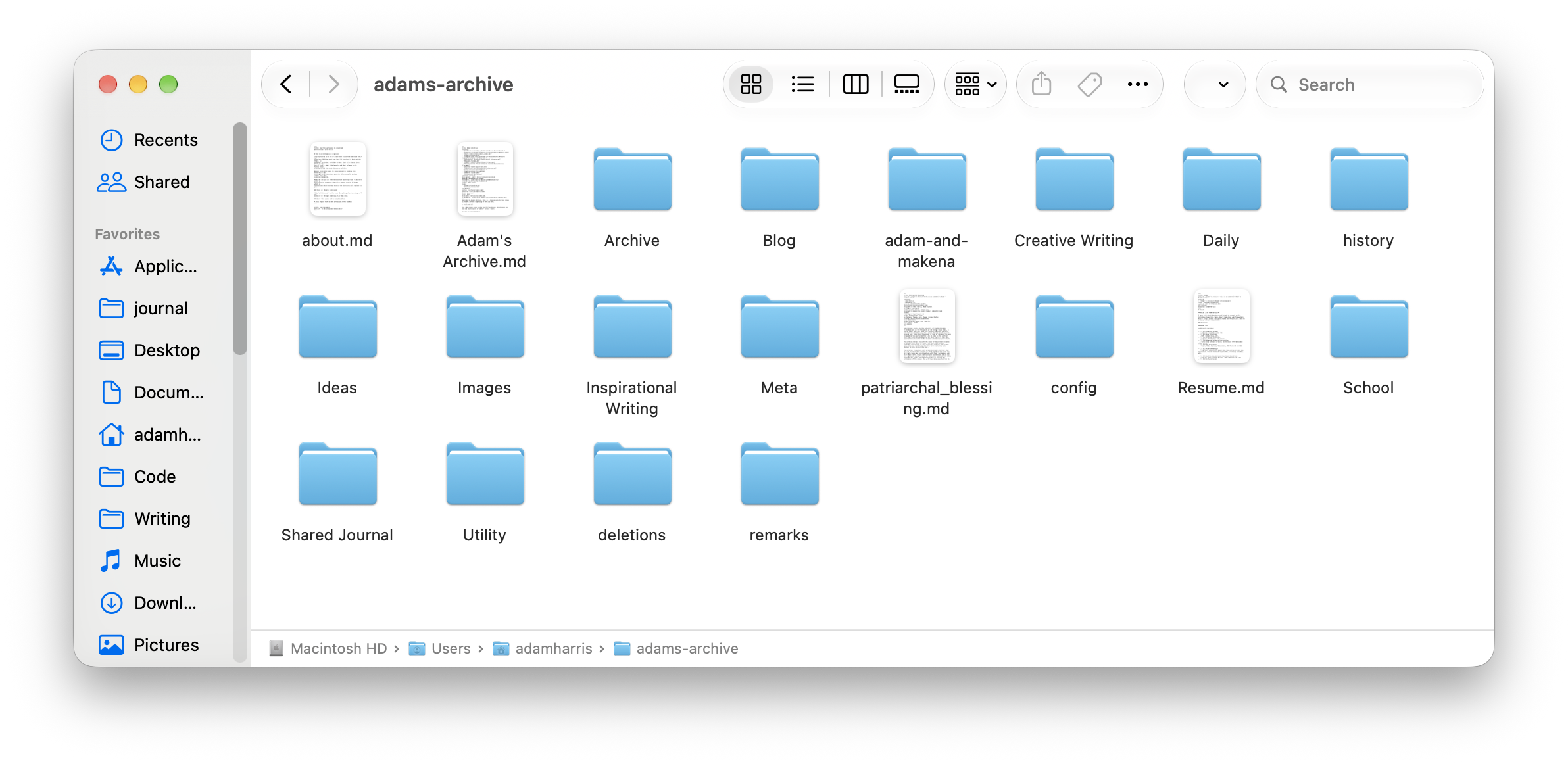
This is a screenshot of my Diaryx library in the macOS Finder. These are basic, plain text files that any application can read. But they can be a bit unintuitive to work with directly1, so Diaryx presents them in a much more pleasant way:
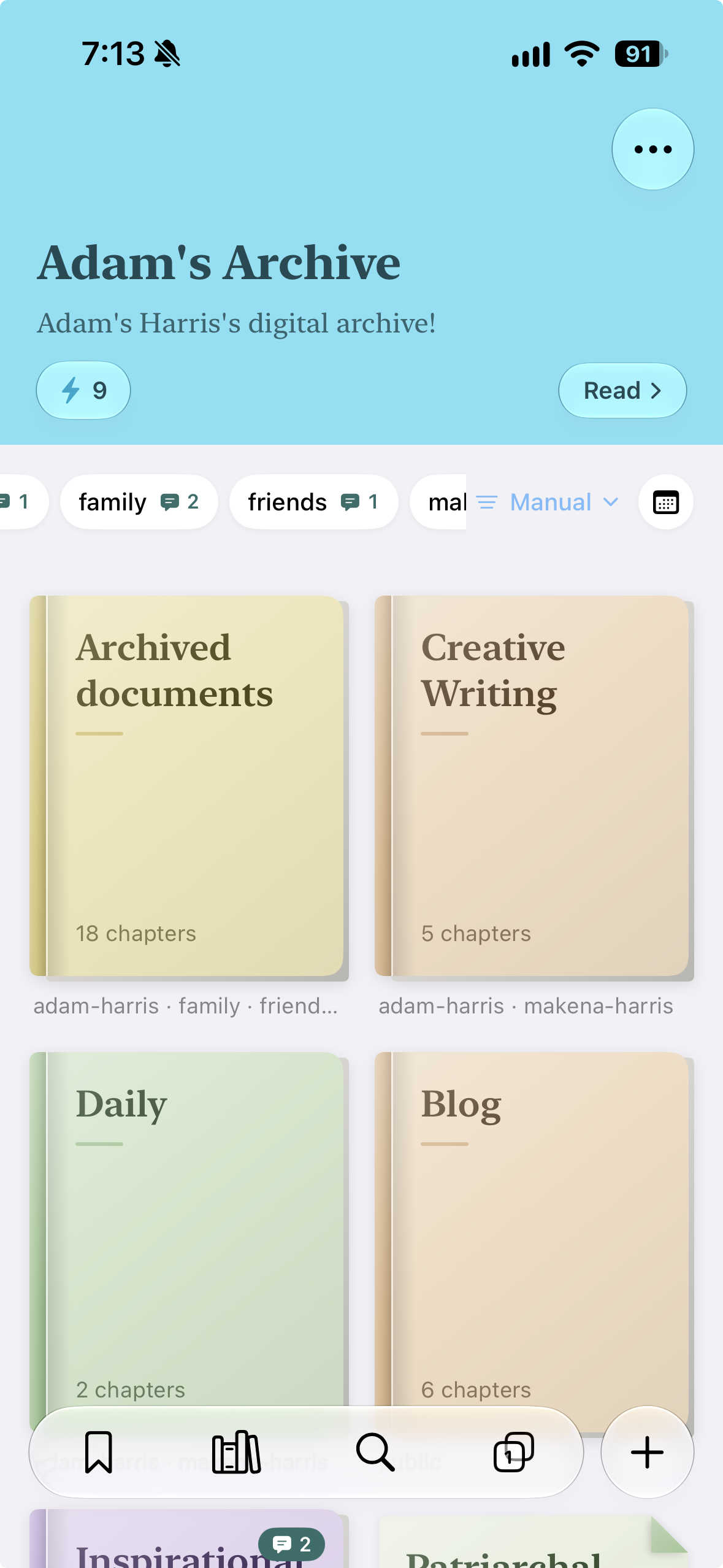
Colorful books! You can change any of the colors, titles, or labels. Soon you will be able to make a book cover into an image or drawing!
I think allowing people to do things like this to their files is essential to help people see information the way it truly is, and take ownership of it like they ought to. They need to not only write and create on their own, but also meta-create: describe the things that they have created on their own terms. Just as a chef tastes his own food, an owner of intellectual property should be able to report how something was created, categorize it however they like, give it whatever labels they wish to give to it, and so forth.
Connection #
Of course, what is the point of owning something if you don't share it? Diaryx builds on the shoulders of giants when it comes to this. I could go on and on about the wonderful, intelligent people who invented standards like Markdown, frontmatter, ARK IDs, or even HTTP. But ultimately, I believe connection is something that should happen naturally. So all I really need to do is not get in the way. If you want to share a file, just get it or copy it however you like.
But I did want to make it easy to publish your files as a website and share securely, only to those you invite. To share documents with others, the app uploads files to Diaryx servers. But before it sends any files, it encrypts them with a key that is stored only on the device, so they can only be accessed by the person who owns them.
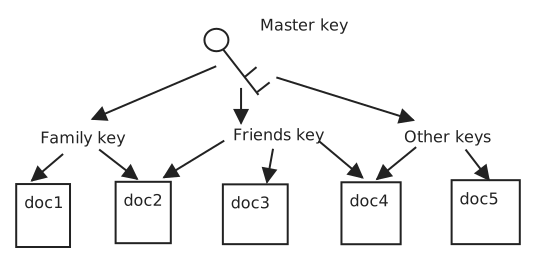
Please excuse my scuffed drawing. But hopefully it illustrates that the master key holder (you) can access any of your files, and and holder of a lesser key (your friends, etc.) can access a subset of those files.
The family, friends, and other keys are stored on the server, but are also encrypted by the master key. So only you can choose where those keys go.
What this leads to #
Hopefully, at this point, it should be obvious to you that I have a much bigger vision for Diaryx than just a journaling app. The best way I can describe it is as "a personal Papers project"—a place for you to store all the documents that matter most to you—not meant to replace the software you use from day to day, but a special place for the things that matter most, so you can share safely with those who matter most to you.
I believe that if every piece of intellectual property—music, art, writing, and the rest—were treated with the respect and care that a Papers project uses, we wouldn't have to suffer the pains of intellectual property laws today: digital rights management, piracy, licensing fees, and intrusive advertisements. I believe that everyone deserves—and owes it to themselves to maintain—a diligently kept record of all the important documents of their lives. Diaryx is designed to make that as easy as possible, like the way it always should have been.
If you would like to support my mission, please download Diaryx and try it out! You can use either the app store link at the top, or this TestFlight link, which receives updates more frequently:
https://testflight.apple.com/join/R8T5s819
If you have any suggestions or feedback, or find a bug that needs fixing, please contact me! Also, there is a Diaryx Plus subscription for $4.99 a month that lets you have more cloud storage and premium voice transcription, if you would like to support me financially as well.
In the coming months, my goal is to iterate until I accomplish the goal and hopefully change the world through small and simple means. Let me know how I could make it even better, if you are interested in the open tech powering Diaryx, or what would convince you that this is something worth paying for. Those are the things I am after at the moment. And personally, I believe this is a big part of what God has called me to do.
May you create amazing things, and find happiness sharing them with the ones you love,
— Adam Harris
-
A fact that isn't obvious: the reason filesystems are unintuitive is because filesystems only expose a very minimal set of metadata for each inode: creation time, modified time, filename, location, and a few others. Filesystem implementations vary widely, and in practice it ends up being more practical to standardize a small set than to allow custom metadata, like colors or tags.↩︎